Blog
Best Dental Insurance for Seniors on Medicare: 2026 Guide
By Medicare Mentors ·
Did you know that nearly half of all Medicare beneficiaries are currently living without any form of dental coverage? It is a startling statistic, especially since Original Medicare doesn't pay for routine cleanings, let alone major work like crowns or implants. Finding the best dental insurance for seniors on medicare can feel like trying to solve a puzzle with missing pieces. You might worry about high out-of-pocket costs or feel frustrated that your long-time dentist in Raleigh or Charlotte isn't in a specific network.
We agree that it's stressful to face these gaps in your healthcare. That's why Dave and Michele Johnson founded Medicare Mentors: to help you bridge the Medicare dental gap with the right coverage for your health needs and your budget. This guide will show you how to find a plan that includes your preferred dentist and explain the key differences between PPO and HMO options. We'll also walk through how to secure coverage for major procedures like dentures or bridges while navigating those confusing waiting periods. Our team is here to act as your advocate, making sure you have the facts you need to make a confident decision for your 2026 coverage.
Key Takeaways
- Learn why Original Medicare doesn't cover routine care and how to spot the specific gaps that lead to high out-of-pocket costs.
- Compare the two main paths to finding the best dental insurance for seniors on medicare, whether you want an all-in-one plan or a standalone policy.
- Identify which major carriers in North Carolina provide the best access to your preferred local dentist in Raleigh, Durham, or Charlotte.
- Use our simple framework to audit your health needs so you don't overpay for coverage you won't use.
- See how an education-first approach helps you compare multiple carriers side-by-side to find a plan that fits your budget.
The Medicare Dental Gap: Why Original Medicare Isn't Enough
Many seniors approach their 65th birthday with a sense of relief, thinking their healthcare worries are finally over. Unfortunately, there is a common misconception, often called "internet mulch," that dental care is automatically included in your government benefits. The reality is that Original Medicare, which consists of Parts A and B, focuses almost exclusively on medical procedures. Unless you are in a rare emergency situation where dental work is required for a hospital procedure to succeed, you are largely on your own for your oral health needs.
To better understand this concept, watch this helpful video:
We believe that protecting your smile is about more than just aesthetics. Research shows a clear link between poor oral health and serious systemic issues like heart disease and diabetes. Because of this, finding the best dental insurance for seniors on medicare is a vital step in your overall medicare-planning strategy. Without a secondary plan, you face the full financial burden of maintaining your health. It's a gap that requires a proactive approach to ensure you aren't hit with unexpected bills during retirement.
What Original Medicare Specifically Excludes
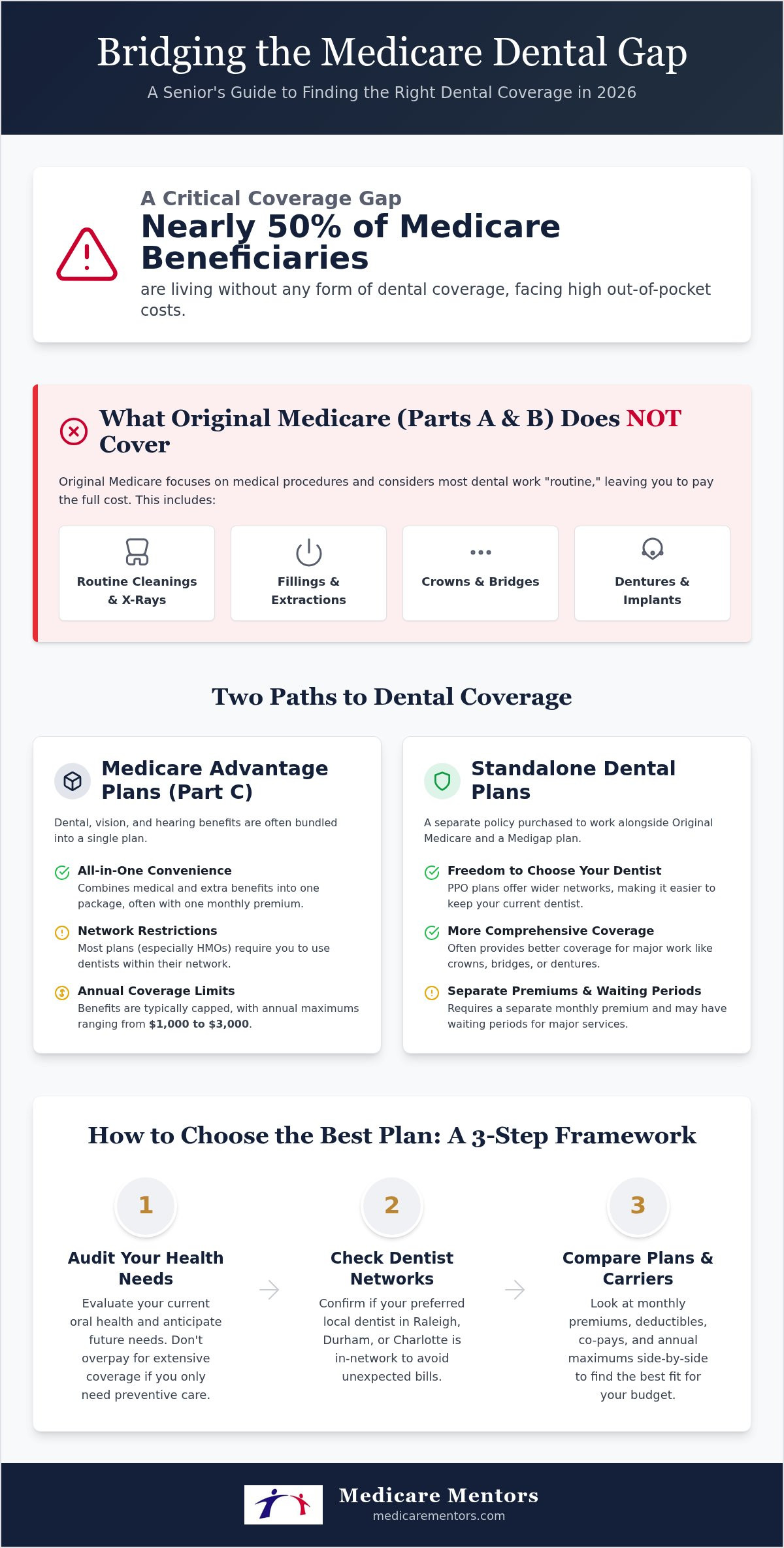
Original Medicare defines "routine care" as anything related to the maintenance of your teeth and gums. This includes the very things you need most as you age: cleanings, x-rays, fillings, and extractions. Even dentures, which are essential for many, are completely excluded from Part B coverage. If you do qualify for a medically necessary dental service under Part B, such as an oral exam before a kidney transplant, you will still pay 20% of the cost after meeting the 2026 Part B deductible of $283. Relying on this "pay as you go" model for major work is a significant financial risk that can drain your savings quickly.
The 2026 Landscape for Senior Dental Health
As we move through 2026, dental technology has advanced rapidly, yet coverage hasn't always kept pace. Modern solutions like dental implants provide a high quality of life, but they are rarely covered by basic plans or government programs. Waiting until you have a toothache to look for coverage is the most expensive strategy you can take. Many Medicare Advantage plans or standalone policies offer better alternatives for those seeking the best dental insurance for seniors on medicare. By prioritizing preventive care now, you can avoid the high out-of-pocket costs that come with major restorative work later in your retirement years.
Medicare Advantage vs. Standalone Dental: Two Paths to Coverage
Choosing the right coverage path depends entirely on your primary Medicare setup. If you are looking for the best dental insurance for seniors on medicare, your first decision is whether you want your dental benefits tied to your health plan or kept as a separate policy. In North Carolina, your choice of a Medicare Advantage plan or a Medicare Supplement (Medigap) plan creates two very different experiences at the dentist's office. The official Medicare website confirms that Original Medicare doesn't cover routine care, so your strategy starts with how you fill that gap.
Dental Benefits in Medicare Advantage Plans
Many residents in the Raleigh-Durham area choose Medicare Advantage (Part C) because it often bundles dental, vision, and hearing into one package. However, it's vital to understand the difference between a simple "allowance" and "comprehensive" dental coverage. In 2026, most Medicare Advantage plans that include dental benefits set an annual maximum on coverage, typically ranging from $1,000 to $3,000. Be careful with HMO networks in North Carolina; these plans often require you to see specific dentists. If your long-time dentist isn't in that network, you could end up paying the full bill yourself. Always ask your provider if they accept the specific "embedded" dental portion of your Advantage plan before you book a cleaning.
Standalone Plans for Medicare Supplement (Medigap) Users
If you prefer the freedom of a Medicare Supplement plan, you'll need a standalone Dental, Vision, and Hearing (DVH) policy. Since Medigap plans only cover what Original Medicare covers, they don't include dental work. A standalone policy is often the best dental insurance for seniors on medicare who want "portable" coverage. This means your dental insurance isn't tied to your health provider. If you change your Medigap company, your dental plan stays exactly the same. Standalone PPO plans are popular in Charlotte and Raleigh because they offer the widest choice of dentists. You aren't restricted to a small list of providers. This flexibility is essential if you have complex needs like bridges or dentures that require a specialist.
Finding the right balance between premium costs and network flexibility is a personal decision that impacts your long-term health. If you're feeling overwhelmed by the options, Dave and Michele Johnson can help you compare these paths side-by-side. You can start by exploring our medicare-planning resources to see which path fits your lifestyle. If you want a professional to look at your specific dentist's network, you can always reach out to our team for a no-cost consultation.
Top Dental Carriers for Seniors in 2026: What to Look For
Finding the best dental insurance for seniors on medicare starts with looking at the major carriers serving North Carolina. According to research, Nearly half of Medicare beneficiaries lack dental coverage. This gap often leads to high out-of-pocket costs when major work is needed. In our state, carriers like Delta Dental, Humana, UnitedHealthcare, and Cigna are the primary options. However, we encourage you to look for "retiree-specific" plans. These policies are designed to prioritize major services like crowns, bridges, or even denture repairs rather than just focusing on basic maintenance.
One of the most critical features to compare is the Maximum Annual Benefit. This is the total amount the insurance company will pay for your care in a calendar year. While a $1,000 limit might sound sufficient for basic cleanings, it can disappear quickly if you need a single implant or a complex root canal. In 2026, many standalone PPO plans offer higher limits, sometimes reaching $2,500 or $3,000. Choosing a plan with a higher ceiling provides a vital safety net for those unexpected dental emergencies that often arise during retirement.
Evaluating Provider Networks in North Carolina
Reimbursement rates vary significantly between "In-Network" and "Out-of-Network" providers. If you live in Greensboro, Fayetteville, or Wilmington, you'll want to verify that your specific dentist participates in the plan's network. Delta Dental's Premier network is often a favorite for North Carolina seniors because it includes a vast number of local providers who agree to pre-negotiated rates. This helps keep your out-of-pocket costs predictable and prevents "balance billing," where a dentist charges you the difference between their standard fee and what the insurance pays. We always recommend performing a specific network search on the carrier's website or calling the office directly before committing to a policy.
Understanding the Fine Print: Coinsurance and Deductibles
Most senior plans follow a "100-80-50" coinsurance structure. This means the plan pays 100% for preventive care, 80% for basic fillings, and 50% for major work like dentures or crowns. Don't be fooled by a $0 deductible; sometimes these plans have higher monthly premiums or lower coverage levels for major procedures. It's also vital to watch out for "Missing Tooth Clauses." These rules can prevent the insurance company from paying for a bridge or implant if the tooth was already missing before your policy started. Understanding these details is a key part of your Medicare Planning journey. Dave and Michele Johnson founded Medicare Mentors to ensure you have a teacher by your side to explain these fine-print details so you aren't surprised at the dentist's office.
How to Choose the Best Plan: A 3-Step Selection Framework
Finding the best dental insurance for seniors on medicare doesn't have to be a guessing game. We believe in an education-first approach that empowers you to make a choice based on logic rather than luck. Instead of just looking at the lowest premium, we suggest using a simple three-step framework to evaluate your options. This method ensures your coverage aligns with your actual health needs and protects your retirement budget from unexpected shocks.
Step 1: Audit your current dental needs. Be honest about the state of your teeth. If you know you have an old crown that is starting to fail or you've been considering implants, a basic plan with a $1,000 maximum won't be enough. Step 2: Check your dentist's network status. In North Carolina cities like Raleigh or Charlotte, many providers only participate in specific PPO networks. Always verify this directly with the office before enrolling. Step 3: Calculate the Total Cost of Ownership. Add your annual premiums to your expected co-pays for the year. Sometimes a plan with a slightly higher monthly cost saves you hundreds on a single major procedure.
Bypassing Dental Waiting Periods
Waiting periods are a common trap that can delay coverage for major work for six to twelve months. Insurance companies use these to prevent people from buying a plan only when they have an immediate dental emergency. However, you can often bypass these delays. If you have had dental insurance within the last 60 days, many carriers will give you "prior coverage credit" to waive the waiting period immediately. For 2026, several standalone plans also offer "No Waiting Period" options, which are ideal if you need a bridge or denture repair right away.
Matching Coverage to Your Specific Health Triggers
Your life stage often dictates your insurance needs. If you are retiring soon and losing employer-sponsored dental, you are in a "guaranteed issue" window that makes switching easier. Those moving to North Carolina should prioritize plans with strong local networks to ensure they don't have to travel far for a specialist. If you want to see how dental fits into a larger protection strategy, you can read The Complete Guide to Dental Vision and Hearing Insurance for Seniors (2026). Dave and Michele Johnson are here to help you navigate these choices without any high-pressure sales tactics. If you're ready to see which carriers fit your specific needs, our team can help you with your Medicare Planning today.
Why Work with Medicare Mentors for Your Dental Needs?
Dave and Michele Johnson founded Medicare Mentors with a simple, personal mission: to treat every client like a neighbor. We believe in an education-first approach where our primary role is to act as your teacher. Choosing the best dental insurance for seniors on medicare is often a multi-piece construction task that requires aligning your primary health plan with your specific dental needs. Because we are independent brokers, we have the freedom to put your interests first. We aren't tied to any single insurance company, which allows us to offer you far more choices than you would find by calling a carrier directly.
Our local expertise in the Raleigh, Durham, and Charlotte markets is a significant advantage for our clients. We understand the local provider networks and know which plans are actually accepted by the most respected dentists in your community. This neighborly quality is part of our commitment to your long-term well-being. Our service is provided at no cost to you, and our support continues long after your initial enrollment. We stay by your side year after year to ensure your coverage remains the right fit as your health needs or local doctor networks change.
Unbiased Comparisons Across All Major Carriers
We don't work for the insurance companies; we work for you. This independence is our core promise of loyalty. When we sit down for a consultation, we run side-by-side comparisons of major carriers like Delta Dental, Humana, and Cigna. We help you look past the marketing and into the details of annual maximums and coinsurance levels. Having a "Medicare Mentor" also means you have a dedicated partner to handle complex billing or claims issues. If a problem arises at the dentist's office, you don't have to navigate the insurance company's phone system alone. We act as your advocate to resolve issues quickly and professionally.
Get Started with Confidence
Trust is the foundation of everything we do. We are proud to have earned nearly 300 Five-Star reviews from North Carolina seniors who appreciate our honest, low-pressure approach. Our process is designed to lower your anxiety by focusing on information rather than sales tactics. We start with a simple, one-on-one conversation where we listen to your specific concerns and health goals. By the end of our time together, you will have a clear understanding of your options and the confidence to make an informed decision for your 2026 coverage. If you're ready to see how we can help you bridge the dental gap, Schedule your no-cost Medicare and Dental review today!
Secure Your Smile and Your Retirement Budget
You now have the tools to bridge the Medicare dental gap with a plan that fits your health needs and your lifestyle. Finding the best dental insurance for seniors on medicare isn't just about the monthly premium. It's about ensuring your favorite North Carolina dentist is in-network and that you have enough coverage for major procedures like crowns or dentures. By following our selection framework, you can avoid common pitfalls like high out-of-pocket costs and frustrating waiting periods.
Dave and Michele Johnson founded Medicare Mentors to provide the education you deserve without the pressure of a sales pitch. As a family-owned and locally operated business in North Carolina, we take pride in offering independent and unbiased advice. With nearly 300 Five-Star reviews, our team is ready to help you compare all major carriers side-by-side to find your perfect match. Book a No-Cost Consultation with Medicare Mentors today to review your options. You've worked hard for your retirement, and we're here to make sure your coverage works just as hard for you.
Frequently Asked Questions
Does Medicare Advantage dental coverage have waiting periods?
Most Medicare Advantage plans do not have waiting periods for preventive care like cleanings or exams. However, some plans might require a six to twelve month wait for major procedures like crowns or bridges. If you are switching from another credible dental plan, you can often get credit for your prior coverage to waive these periods immediately. We help you review the specific rules for plans in Raleigh and Durham to ensure you have access to care when you need it.
Can I keep my current dentist if I switch to a Medicare dental plan?
You can often keep your current dentist if they participate in the plan's network. PPO plans offer the most flexibility, allowing you to see providers in Charlotte or Greensboro even if they are out of network, though your costs will be lower with an in-network provider. HMO plans generally require you to stay within a specific group of dentists. Our team can perform a provider search to verify your dentist's status before you make any changes.
Is standalone dental insurance better than the dental included in Part C?
Standalone insurance is often the best dental insurance for seniors on medicare who want portability and a wider choice of providers. While Medicare Advantage (Part C) offers the convenience of a single card, standalone policies aren't tied to your health plan. This means you can change your medical coverage without losing your dental benefits. We help you evaluate whether the bundled convenience or the standalone flexibility is the right choice for your specific health goals.
What is the best dental insurance for seniors who need implants?
The best dental insurance for seniors on medicare who need implants is usually a high-maximum PPO plan. Because implants are a major investment, you should prioritize a policy with a $2,000 to $3,000 annual limit. It's also vital to check the fine print for "Missing Tooth Clauses" that could deny your claim if the tooth was lost before the policy started. We can help you compare plans from carriers that offer these specialized restorative benefits in North Carolina.
How much does dental insurance for seniors typically cost in North Carolina?
Monthly premiums for senior dental plans in North Carolina typically range from $20 to $70. Basic preventive plans are on the lower end of that scale, while comprehensive coverage for major work like dentures costs more. You should also consider the annual deductible and coinsurance to understand your true out-of-pocket risk. We provide no-cost consultations to help you compare these costs side-by-side so you can find a plan that fits your retirement budget perfectly.
Do dental plans for seniors cover dentures and bridges?
Yes, most comprehensive senior dental plans cover dentures and bridges, typically at a 50% coinsurance rate. This means the insurance company pays half the cost after you meet your annual deductible. It's important to check if there is a waiting period for these major services before you schedule your appointment. We can help you find plans in the Fayetteville or Wilmington areas that offer robust coverage for restorative dental work to protect your long-term oral health.
Can I buy dental insurance if I already have a Medigap plan?
You absolutely can buy a standalone dental policy if you have a Medigap plan. Since Medicare Supplement plans only cover what Original Medicare covers, they do not include routine dental benefits. Adding a separate dental, vision, and hearing policy is a common way for seniors in Winston-Salem or High Point to fill this gap. This keeps your medical and dental coverage separate, providing more flexibility if you decide to change your health insurance carrier later.
What happens to my dental coverage if I move to a different city in NC?
Your dental coverage usually stays active if you move within North Carolina, especially with standalone policies. However, if your dental is bundled with a Medicare Advantage plan, a move to a city like Charlotte or Wilmington might require you to switch plans. This move often creates a Special Enrollment Period where you can choose new coverage. We offer lifetime support to our clients, helping you update your coverage and find new local networks whenever your life situation changes.