
Blog
Best Hearing Plans for Seniors on Medicare: A 2026 Guide to Closing the Coverage Gap
By Medicare Mentors ·

Did you know that while nearly half of adults over 75 experience hearing loss, Original Medicare still provides exactly zero dollars toward the cost of hearing aids in 2026? It's a frustrating reality for many of our neighbors in North Carolina who face retail costs that can easily top $3,000 for a single pair of devices. We understand how isolating it feels when you can't follow a conversation at the dinner table, especially when you're already managing the transitions of retirement. Finding the best hearing plans for seniors on medicare shouldn't feel like a second job, yet the "Hearing Gap" left by decades-old legislation remains a significant hurdle for your budget and your health.
We're here to help you bridge that gap by exploring the most cost-effective ways to secure the hearing technology you deserve. You'll discover how to choose between Medicare Advantage allowances and standalone plan copays so you can avoid high out-of-pocket expenses. We'll break down the pros and cons of various options, from specific network allowances to comprehensive plans that cover both exams and devices. This guide provides the clarity you need to compare major carriers with a local expert who acts as your protective ally through these complex insurance decisions.
Key Takeaways
- Learn why Original Medicare excludes hearing aids and how this "Hearing Gap" impacts your out-of-pocket costs in 2026.
- Understand the medical exceptions that allow Medicare Part B to pay for diagnostic hearing exams when ordered by your doctor.
- Discover how to identify the best hearing plans for seniors on medicare by comparing Advantage plan allowances against standalone insurance options.
- Find out how adding a standalone dental, vision, and hearing policy can provide comprehensive coverage if you choose a Medigap plan.
- Get a step-by-step roadmap to help you navigate North Carolina carrier networks and secure the hearing technology you need to stay connected.
Does Medicare Cover Hearing Aids in 2026? The 'Hearing Gap' Explained
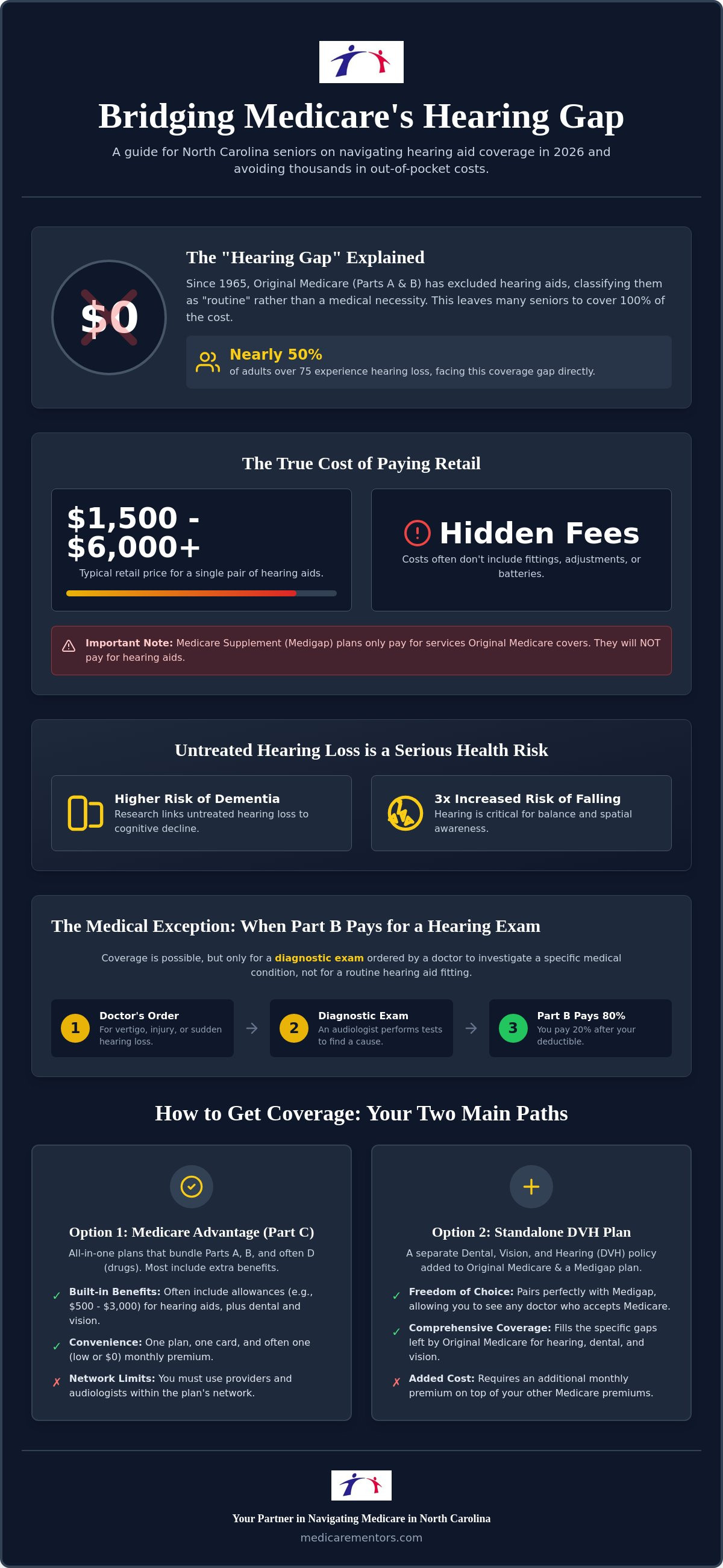
Most people are surprised to learn that their federal health coverage has a massive hole. Since 1965, the law has treated hearing care as a luxury rather than a medical necessity. When Original Medicare (Parts A and B) was first signed into law, the high-tech, digital hearing aids we use today simply didn't exist. This historical oversight has created what we call the "Hearing Gap." It is a frustrating reality for seniors in North Carolina who are retiring or losing employer-based coverage. Without finding the best hearing plans for seniors on medicare, you are often left responsible for 100% of the costs for exams and devices.
To better understand how specific plans can fill these holes, watch this helpful video:
The Statutory Exclusion Rule
The "Hearing Gap" is the statutory exclusion of hearing aid coverage from federal insurance, a rule that has remained unchanged since 1965 despite the rising costs of modern technology. The government classifies hearing aids and routine fitting exams as "routine" rather than "medical." This means Part B will deny your claim for a standard hearing test if the goal is just to see if you need a hearing aid. This gap is dangerous. Research shows that untreated hearing loss is linked to a higher risk of dementia and a three-fold increase in the risk of falling. We believe your hearing is a vital part of your overall health, not a routine extra.
The True Cost of Paying Retail
If you walk into a clinic without the right coverage, the sticker shock can be intense. In 2026, retail prices for a pair of mid-level hearing aids usually start around $1,500. Premium prescription devices can easily reach $6,000. These prices don't always include the hidden fees that add up quickly. You might pay extra for the initial fitting, follow-up adjustments, and the ongoing cost of batteries or charging cases. Many of our clients assume their Medigap policy will cover these bills. However, Medigap only pays for things that Medicare already covers. Since Medicare doesn't cover hearing aids, your supplement plan won't either. This is why many people look into medicare planning options that include specific Advantage or standalone hearing policies to protect their savings.
Securing the best hearing plans for seniors on medicare requires looking beyond basic coverage. You need a strategy that accounts for both the technology you need and the professional care required to maintain it. In the next section, we'll look at the specific medical exceptions where Medicare actually does step in to help.
When Medicare Part B Pays for Hearing Services (The Medical Exception)
While the general rule for Medicare coverage for hearing aids is a firm "no," there are specific medical scenarios where Part B steps in to help. It's a common point of confusion for many of our neighbors in North Carolina. They often assume that any visit to an audiologist is covered, only to be surprised by a bill later. The secret lies in why you're sitting in the exam chair. If your doctor suspects a medical condition rather than just age-related decline, the financial picture changes completely.
To get Medicare to pay for a hearing exam, you must have a physician's order. This isn't just a suggestion; it's a formal "script" from your primary care doctor. They must document that the test is needed to diagnose a specific medical issue, such as vertigo, a recent injury, or sudden, unexplained hearing loss. When you're searching for the best hearing plans for seniors on medicare, it's vital to distinguish between these medical diagnostic tests and routine screenings. For these covered diagnostic exams, you'll be responsible for the 20% coinsurance after you meet your 2026 Part B deductible, which is $283.
Diagnostic vs. Routine: Knowing the Difference
The difference between a covered exam and a denied claim often comes down to the paperwork. A "routine" screening is what you get when you simply want to see if you need hearing aids because the TV is getting louder. Medicare Part B never covers this. However, if you're experiencing balance disorders or hearing loss following a round of chemotherapy, those are considered medical needs. If you're unsure where your current symptoms fall, we can help you with Medicare Planning to review how your specific plan handles these diagnostic exceptions.
Coverage for Cochlear Implants and Bone-Anchored Aids
There is a point where hearing technology transitions from being an "aid" to being a "prosthetic." In 2026, Medicare treats cochlear implants and certain bone-anchored hearing systems as prosthetic devices rather than simple hearing aids. This is excellent news for those with profound hearing loss because it means Part B may cover the surgery and the device itself as a medical necessity. To qualify, you must meet strict clinical criteria and use Medicare-approved facilities here in North Carolina. Finding the best hearing plans for seniors on medicare often means looking for options that provide clear paths to these advanced surgical solutions when standard devices aren't enough. If you're feeling overwhelmed by these technical requirements, reaching out to a local mentor can help you compare how different carriers handle these complex claims.
Medicare Advantage (Part C): The Best Hearing Plans for Seniors
Since Original Medicare leaves such a significant gap in your care, Medicare Advantage plans have become the primary way our neighbors in North Carolina secure coverage for hearing aids. These plans, also known as Part C, are offered by private companies that contract with Medicare to provide all your Part A and B benefits plus extra perks. In 2026, approximately 95% of Advantage enrollees are in plans that include some form of hearing exams or aid coverage. If you want to understand the full scope of these options, we recommend reviewing The Ultimate Guide to Medicare Advantage Plans in 2026.
Finding the best hearing plans for seniors on medicare often involves looking at how these carriers partner with third-party networks. Companies like TruHearing or UnitedHealthcare Hearing manage the actual delivery of the devices. By using these specialized networks, insurance carriers can offer much lower prices than you'd find at a traditional retail clinic. However, you need to understand exactly how your specific plan pays for these devices before you visit an audiologist, as the structure can vary wildly between companies.
How Advantage Plan Benefits Are Structured
We typically see two different ways that Advantage plans handle the cost of your hearing aids. The first is the Allowance Model. This acts like a credit, often ranging from $500 to over $2,000, which you can apply toward the purchase of any device in the network. The second is the Copay Model. With this setup, you pay a flat, predictable fee, such as $699 per ear, regardless of the retail price of the device. It's vital to check your 2026 Evidence of Coverage (EOC) document, as these numbers can change every year during the Annual Enrollment period. We can help you compare these documents so you aren't surprised by a change in your benefits.
Network Restrictions and Audiologist Choice
While these plans offer great savings, there's a trade-off you should consider. Most Advantage plans require you to use a specific network of providers in cities like Raleigh or Charlotte. If you have a favorite local audiologist who isn't in that network, the plan might not pay anything toward your devices. Additionally, networks often limit which brands you can choose. You might find that a plan offers excellent pricing on Signia devices but doesn't carry Phonak at all. We always suggest asking about the trial period and whether follow-up adjustments are included in your initial copay. These services are essential for getting the most out of your new technology, and we want to ensure you have a local expert to help with those fine-tuning appointments.
Standalone Dental, Vision, and Hearing (DVH) Plans
Many of our clients prefer the comprehensive protection of a Medicare Supplement (Medigap) plan. However, because Medigap only covers what Medicare covers, it leaves the "Hearing Gap" wide open. This is where a standalone Dental, Vision, and Hearing (DVH) policy becomes a vital tool for your long term well-being. These plans are often the best hearing plans for seniors on medicare who want to keep their freedom of choice while still protecting their budget from the high cost of devices. Think of your coverage like a multi-piece construction task; you have the foundation of Medicare, the walls of Medigap, and the DVH plan is the roof that completes the structure. For a deeper dive into these options, you can read The Complete Guide to Dental Vision and Hearing Insurance for Seniors (2026).
These policies work by bundling three essential services into one convenient monthly premium. Instead of managing separate bills for your teeth, eyes, and ears, you have a single "bucket" of coverage. A unique feature of many 2026 plans is the use of "graduated benefits." This means the insurance company pays a higher percentage of your bill the longer you stay with the plan. For example, a policy might cover 60% of your hearing aid costs in the first year, but that amount often increases to 80% or more by the third year. It's a structure that rewards patience and reliability. This graduated structure is why we tell our students that the best time to buy a plan is before you actually need it.
Medigap + Standalone DVH: A Popular NC Strategy
In North Carolina, we see many seniors pairing a Medigap Plan G with a standalone DVH policy. This strategy avoids the "network handcuffs" often found in Advantage plans. You can visit any audiologist you trust in Raleigh, Charlotte, or even your local small-town clinic without worrying about whether they are in a specific carrier's directory. When you compare the monthly premium, which typically ranges from $25 to $50, to the multi-thousand dollar retail cost of even one hearing aid, the value becomes clear. It's about securing a predictable cost today to avoid a financial shock tomorrow. This approach offers a level of independence that many of our neighbors find very comforting.
What to Look for in a 2026 DVH Policy
Timing is everything when it comes to these plans. Most standalone policies have waiting periods, sometimes up to 12 months, before they will pay for major items like hearing aids. If you wait until you're struggling to hear at family gatherings to apply, you might find yourself waiting another year for the benefit to kick in. We recommend looking for plans that offer:
- Flexible reimbursement rates for both in-network and out-of-network providers across North Carolina.
- Coverage for routine eye exams and dental cleanings under the same umbrella to maximize your premium dollars.
- Clear rules on how often you can replace your devices, which is typically every 3 to 4 years in most 2026 policies.
If you're ready to see how these pieces fit together for your specific needs, schedule a review with a local mentor to compare the latest 2026 rates and waiting periods.
Choosing Your Plan: The North Carolina Mentor's Roadmap
Finding the best hearing plans for seniors on medicare requires more than just looking at a glossy brochure. It's a journey that starts with understanding your own physical needs and ends with a plan that protects your lifestyle. We've developed a simple, four-step roadmap to help our students in North Carolina move from confusion to confidence. Think of this process as assembling the right pieces for a sturdy foundation; when the steps are followed in order, the final result is a plan that stands the test of time.
- Step 1: Get a baseline hearing test. You can't choose the right technology if you don't know the extent of your hearing loss. A professional exam tells you whether you need basic amplification or premium, multi-channel devices.
- Step 2: Choose your coverage framework. You must decide between the network-based savings of a Medicare Advantage plan or the provider freedom of a Medigap policy paired with a standalone DVH plan.
- Step 3: Compare 2026 NC carrier options. We help you look at the fine print for major carriers like Blue Cross NC, Humana, and UnitedHealthcare. Each carrier has different partnerships with hearing aid networks that impact your costs.
- Step 4: Consult with a Medicare Mentor. We review the specific device brands and follow-up care rules to ensure your favorite local audiologist is accessible and your preferred technology is covered.
The Value of a Local Raleigh Broker
Having a local partner who knows the medical landscape of Raleigh, Durham, and Charlotte makes a world of difference. When you work with us, you aren't talking to a call center in another time zone. Dave and Michele Johnson founded Medicare Mentors in 2011 with a simple "Teacher-Student" philosophy. We believe that when you're educated on your options, you'll make the best decision for your own health. If you're wondering why use a medicare broker, it's because we act as your protective ally against rising costs and shifting networks. We aren't beholden to any single carrier; our loyalty belongs to you.
Next Steps for Your 2026 Coverage
The Annual Enrollment Period can feel like a high-pressure race, but it doesn't have to be that way. We recommend preparing a list of your current doctors and any hearing aid brands you've used in the past. This preparation allows us to move at your preferred pace during a consultation. We're here to offer objective advice at no cost to you, ensuring you find the best hearing plans for seniors on medicare before the 2026 deadlines arrive. You're invited to schedule your free Medicare planning session today to start building your personalized coverage strategy.
Take the Next Step Toward Better Hearing in 2026
Closing the "Hearing Gap" doesn't have to be a lonely process. You have options. While Original Medicare leaves out routine hearing care, you can bridge that hole through Medicare Advantage networks or standalone DVH policies. Choosing the best hearing plans for seniors on medicare is simply about matching your specific health needs with the right carrier network in North Carolina. Whether you prefer fixed copays or the freedom of a standalone plan, a strategy exists for your budget.
Since 2011, Dave and Michele Johnson have served as protective allies for seniors in Raleigh, Durham, and across the state. We act as independent brokers. We don't represent just one carrier. Instead, we provide objective, teacher-student guidance to help you compare every major option without any sales pressure. We invite you to let a Medicare Mentor help you find the best hearing plan for 2026 through one of our zero-cost consultations. You deserve to stay connected to the people you love. We look forward to helping you find the clarity you need for the years ahead.
Frequently Asked Questions
Does Medicare Part B cover hearing aid batteries or repairs in 2026?
No, Original Medicare (Part B) does not pay for batteries, repairs, or ongoing maintenance for hearing aids. The federal government still classifies these as personal items rather than medical necessities. To find the best hearing plans for seniors on medicare that include these extras, you should look into specific Medicare Advantage plans. Many of these plans bundle a multi-year warranty and a starter supply of batteries into your initial device copay.
Can I use my Health Savings Account (HSA) to pay for hearing aids?
Yes, you can use your existing HSA funds to pay for hearing aids and related accessories. The IRS recognizes hearing aids and their maintenance as qualified medical expenses. While you can't contribute new money to an HSA once you enroll in Medicare Part A or Part B, the money already in your account remains yours to use for these high-cost devices tax-free.
Are over-the-counter (OTC) hearing aids covered by Medicare Advantage plans?
Many 2026 Medicare Advantage plans allow you to use your quarterly over-the-counter (OTC) allowance to purchase OTC hearing aids. These devices are intended for adults with mild to moderate hearing loss and are becoming a popular, budget-friendly option. You'll need to check your plan's specific catalog or pharmacy network to see which brands are eligible for your OTC credit.
What is the difference between a hearing aid and a hearing amplifier?
Hearing aids are FDA-regulated medical devices designed to treat specific types of hearing loss by amplifying only the frequencies you struggle to hear. Hearing amplifiers, or PSAPs, simply make all environmental sounds louder. They don't account for your unique hearing profile and aren't intended to treat medical hearing loss. Using an amplifier when you need a medical device can sometimes lead to further ear damage.
Does Medigap Plan G cover hearing aid costs?
No, Medigap Plan G does not cover hearing aids or routine hearing exams. Supplement plans only pay for the "gaps" in things Medicare already covers, like the 20% coinsurance for a doctor visit. Because Original Medicare excludes routine hearing care, your Medigap plan has no underlying coverage to supplement. This is why we often suggest adding a standalone policy to fill this specific hole in your protection.
How often will a Medicare Advantage plan pay for new hearing aids?
Most Medicare Advantage plans provide a hearing aid benefit that resets every one, two, or three years. The exact timeframe depends on your specific carrier and plan choice. When searching for the best hearing plans for seniors on medicare, it's vital to check the Evidence of Coverage. Some plans offer a higher allowance if you wait longer between upgrades, while others provide a steady copay every single year.
Do I need a referral to see an audiologist under Medicare?
You need a formal physician's order from your primary doctor if you want Medicare Part B to pay for a diagnostic hearing exam. For routine exams under a Medicare Advantage plan, the rules vary. If you have an HMO plan, you'll likely need a referral from your doctor. If you have a PPO plan, you can usually book an appointment directly with an in-network audiologist without seeing your doctor first.
What happens to my hearing coverage if I move to North Carolina from another state?
Moving to North Carolina triggers a Special Enrollment Period, giving you a chance to update your coverage. Since many hearing benefits are tied to regional provider networks, your old plan might not have any participating audiologists in Raleigh or Charlotte. You'll have a window of time to compare NC-specific carriers and choose a new plan that keeps your hearing care accessible and affordable in your new neighborhood.