
Blog
How to Choose the Best Medicare Agent in Raleigh, NC
By Medicare Mentors ·
What if the best Medicare agent for you isn’t the one with the fastest answer, but the one who helps you understand your choices before you decide? If you’re comparing Medicare Advantage, Medicare Supplement, and Part D plans in Raleigh, it’s reasonable to ask whether an agent represents one insurer, whether guidance costs you anything, and whether a conversation commits you to enroll.
Those questions matter when your doctors, prescriptions, budget, or coverage needs are part of the decision. A helpful agent should explain what they can assist with, be clear about which plans and companies they represent, and give you room to make your own choice.
In this guide, you’ll learn what a medicare agent can and can’t help with, how to evaluate options in North Carolina, and what to ask before sharing personal coverage details. You’ll also learn how to check whether guidance comes at a cost, whether you’re being asked to enroll, and what ongoing support may look like if your needs change.
Key Takeaways
- A medicare agent may help you understand plan options, compare coverage, enroll, and get support with later questions.
- Ask which insurance companies an agent represents. A title alone doesn’t tell you whether they’re independent or carrier-affiliated.
- Before enrolling, check how clearly the agent explains your choices, which plans they can discuss, and what help is available afterward.
- Plan options can vary by county and ZIP code, so confirm what’s available where you live in North Carolina.
- Medicare Mentors is a family-run brokerage founded by Dave and Michele Johnson in 2011, serving listed cities including Raleigh, Durham, Chapel Hill, and Greensboro.
What Does a Medicare Agent Do, and When Can One Help?
A Medicare agent is an insurance professional who helps you understand coverage options and, if you choose, assists with enrollment. This may include explaining Medicare Advantage, Medicare Supplement, and Part D plans, comparing available options, and answering coverage questions later. The agent can help you understand the choices, but the plan itself provides the coverage.
A medicare agent can explain insurance terms and help you compare options, but they don’t provide medical advice, decide Medicare eligibility, or guarantee that a particular service or benefit will be covered. Ask where plan details are documented so you can review them yourself. For a neutral overview of the independent intermediary role, see Insurance broker.
This video offers another perspective on choosing an insurance agent:
Which Medicare decisions can an agent help you understand?
An agent can help you compare Medicare Advantage, Medicare Supplement, and Part D prescription drug options. Useful questions include whether your doctors are in a plan’s network, how your prescriptions are covered, and which costs you may need to consider. If you want to explore how various plans structure comprehensive coverage, you can discover The Modern Medicare Agency for helpful guides. Availability, benefits, and plan rules vary by location and plan, so confirm details for your county and ZIP code.
Support may continue after enrollment. Ask whether the agent offers annual coverage reviews or can help if your prescriptions, health needs, doctors, or coverage change. Reviewing these details can help you recognize when it may be useful to look at your options again.
When should you consider speaking with a Medicare agent?
Consider a conversation if you’re approaching 65, retiring soon, or planning to keep working past 65. Guidance may also be useful if you’re losing employer coverage, moving to North Carolina, or find that a change to a doctor or prescription affects your current plan. Bring a list of your prescriptions, providers, and coverage questions. Before sharing sensitive details, ask how your personal information will be used.
If you need enrollment timing basics, consult a Medicare enrollment guide. For a broader overview of coverage choices, explore Medicare planning guidance. Medicare Mentors provides education-first guidance and consultations at no cost to the client. That does not mean the plans themselves are free.
Medicare Agent, Broker, or Captive Agent: What Should You Know?
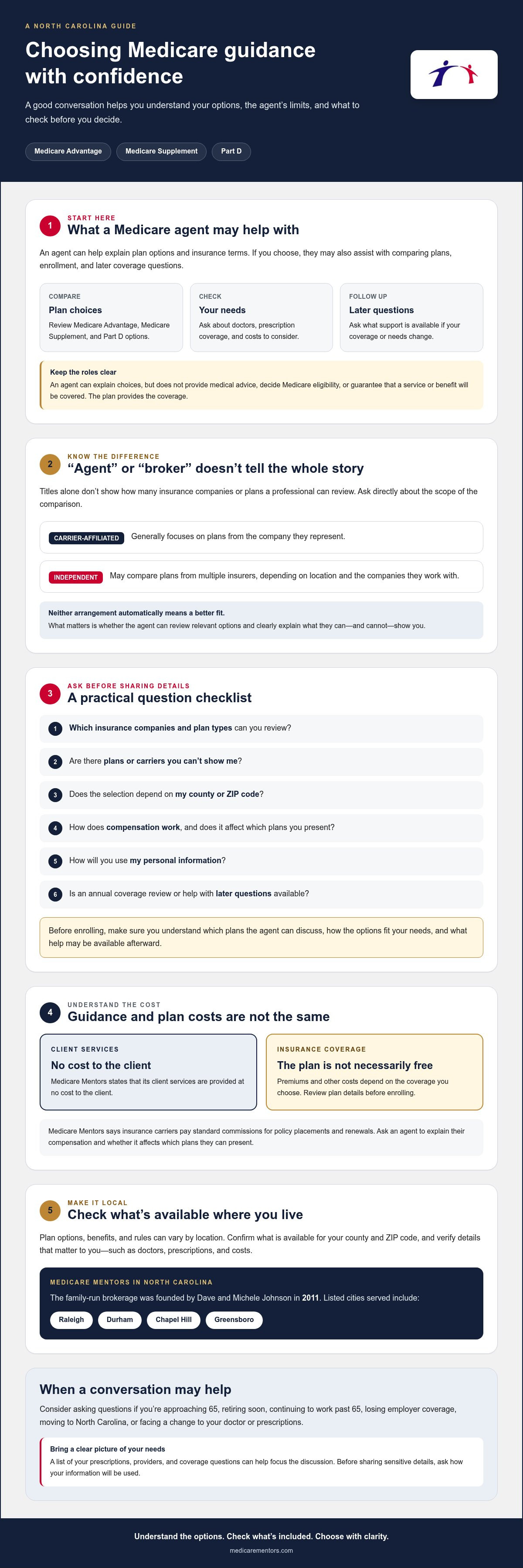
The titles “agent” and “broker” don’t always tell you how many insurance companies someone represents. A captive or carrier-affiliated agent generally focuses on plans from the company they represent, while an independent broker may compare plans from multiple insurers. Neither arrangement automatically leads to a better fit. What matters is whether the professional can review options relevant to your needs and clearly explain any limits.
Medicare Mentors describes its brokers as independent and not tied to one insurance carrier. That can allow comparisons across insurers, but available plans still depend on your location and the companies the broker works with. You can also use the official Medicare Plan Finder to review available Medicare plans.
How can you tell whether a Medicare agent is independent?
Ask direct questions before discussing personal coverage details:
- Which insurance companies and plan types can you review?
- Are there plans or carriers you can’t show me?
- Does your selection depend on my county or ZIP code?
The answers clarify the scope of the comparison. An agent may not represent every insurer or have access to every plan in your area. A clear explanation of what is and isn’t included helps you decide whether to seek another perspective. For an example of how an independent agency assists clients with coverage options, you can learn more about All Insurance LLC.
How are Medicare agents compensated, and does guidance cost you?
Medicare Mentors states that its client services are provided at no cost to the client. The business also states that insurance carriers pay standard commissions for policy placements and renewals. Ask an agent to explain how compensation works and whether it affects which plans they can present.
No-cost guidance doesn’t mean the insurance plan itself is free. Plan premiums and other costs depend on the coverage you choose. Review the plan details before enrolling, and make sure you understand what you may pay and how the coverage works.
To explore Medicare Mentors’ education-first approach, start with its Medicare planning guidance. Before deciding whether to move forward, use the questions above to clarify who the agent represents and which options they can review.
How to Evaluate a Medicare Agent Before You Enroll
A useful first conversation should leave you better informed, not rushed. Use this checklist to assess whether the agent listens to your priorities, explains trade-offs in plain language, and describes what help is available after enrollment.
- Clarify representation. Ask which insurance companies and Medicare Advantage, Medicare Supplement, and Part D options the agent can review. Find out whether plans you’re interested in fall outside those options.
- Explain your priorities. Share which doctors and pharmacies you prefer, the prescriptions you take, and the budget you’re considering. Ask how those details shape the comparison and what you should verify directly with a plan.
- Ask about costs. Find out whether the agent’s guidance costs you anything, how the agent is compensated, and which plan costs you’ll need to review. Help at no cost does not mean the coverage itself has no cost.
- Check what happens after enrollment. Ask whether annual reviews and help with billing or claims are available, and how to reconnect if your prescriptions, health needs, or coverage change.
- Give yourself room to decide. Ask for time to review the information. Compare the options and written plan details before enrolling, especially if you feel pushed to act before your questions are answered.
Listen for clarity, not promises
A helpful agent should explain why a plan may fit your priorities and where it may involve trade-offs. For example, ask what happens if your preferred plan isn’t among the options they can review. A straightforward answer helps you understand the limits of the conversation and whether you want another source of information.
If you want an additional perspective, North Carolina’s SHIIP office provides unbiased Medicare counseling. You can use this resource to ask questions or check your understanding as you compare information.
Keep this summary handy: ask who the agent represents, what guidance may cost, which choices they can review, and what support continues after enrollment. A trustworthy conversation should make those answers clearer, not harder to find. Medicare Mentors offers education-first guidance and ongoing help at no cost to the client. Its Medicare planning guidance is another way to learn about coverage options before making a decision.
Finding Medicare Agent Help in North Carolina
Medicare choices are local. Plans and their details can vary by county and ZIP code, so a medicare agent should confirm what’s available where you live rather than assume a plan or provider network applies statewide. Before comparing options, check whether the agent serves your county and can review plans offered in your area.
Medicare Mentors lists Raleigh, Durham, Chapel Hill, and Greensboro among its service cities, along with Fayetteville, Wilmington, Charlotte, Winston-Salem, High Point, and Greenville. Confirm directly whether guidance is available for your location and which plans can be reviewed there. A city listing alone doesn’t confirm that a particular plan, doctor, or benefit is available to you.
What should North Carolina residents confirm locally?
Check the details that may affect your day-to-day care and costs. Ask whether your doctors and hospitals are included in a plan’s network, and review how your prescriptions and preferred pharmacies fit. Provider participation and prescription coverage can differ by plan, so verify those details for the exact plan you’re considering before enrolling.
For another way to compare current options, use Medicare.gov’s Plan Finder. North Carolina residents can also contact North Carolina’s SHIIP program for Medicare information and counseling. These resources can help you check what you hear and consider options beyond one conversation.
How can you prepare for a local Medicare conversation?
A little preparation makes it easier to focus on your needs. Before speaking with an agent, gather:
- Your current coverage information, if you have it
- The names of your prescriptions and preferred pharmacies
- Your doctors’ and hospitals’ names
- A short list of questions about budget, coverage, or plan changes
Also note recent life changes, such as moving, retiring, or losing employer coverage. These details can shape which choices are relevant and what timing questions to ask. You don’t need to have every answer ready. The goal is to make the conversation specific to your circumstances.
If you’d like personalized help reviewing Medicare options, explore Medicare planning guidance from Medicare Mentors. Confirm service availability for your county and ask which local plans the team can review.
How Medicare Mentors Helps You Choose Coverage With Confidence
Choosing coverage means weighing several details together: your doctors, prescriptions, budget, and the plans available where you live. Medicare Mentors takes an education-first approach, helping you understand those factors and consider your options before deciding. Its independent brokers aren’t tied to one insurance carrier, though the plans they can review may still depend on your location and available options.
Dave and Michele Johnson founded the family-run brokerage in 2011. Medicare Mentors offers consultations, plan guidance, annual reviews, and ongoing help with questions about billing, claims, or changing coverage needs. The aim is to help you feel informed as you decide, not to promise a particular plan or outcome. The business reports almost 300 Five-Star Reviews, but reviews can’t guarantee that a specific plan will fit your situation.
What to expect from a no-cost Medicare consultation
Medicare Mentors states that its services are provided at no cost to the client. A conversation can focus on your priorities, such as the prescriptions you take, the providers you prefer, and the coverage options available in your area. You can ask about Medicare Advantage (Part C), Medicare Supplement, or Part D and take time to weigh the answers.
Bring a list of your prescriptions and providers if you have one. Ask how the options compare and what details you should verify before enrolling. The goal is to help you understand your choices, not to guarantee benefits or replace advice from your medical providers.
Take a clear next step with Medicare Mentors
If you’re deciding between Medicare Advantage, Medicare Supplement, and Part D, ask how each option relates to your needs and what trade-offs to consider. For a deeper explanation of Part C, ask Medicare Mentors whether a Medicare Advantage guide is available. Confirm that any plan details reflect your county and ZIP code.
Whether you’re approaching 65, retiring, or reviewing coverage after a change in prescriptions or providers, you can start with questions rather than a commitment. For personalized guidance, talk with Medicare Mentors about your Medicare options.
Choose Your Next Step With Confidence
The right Medicare agent should help you understand your options, explain which companies and plans they can review, and leave you room to decide. Before enrolling, check that the choices fit your location, providers, prescriptions, and budget. Ask what support is available if your needs change.
Medicare Mentors is an independent, family-run brokerage founded by Dave and Michele Johnson in 2011. Its services are provided at no cost to the client, and the business has almost 300 Five-Star Reviews. Reviews can offer perspective, but your questions and the details of each plan should guide your decision.
If you’re ready to discuss Medicare Advantage, Medicare Supplement, or Part D options, start with your questions and learn what guidance may be available for your situation. Talk with Medicare Mentors about your Medicare options, and take the time you need to understand your choices.
Frequently Asked Questions
What does a Medicare agent do?
A Medicare agent helps you understand available coverage choices and may assist with comparing plans and enrollment. They can discuss Medicare Advantage, Medicare Supplement, and Part D options, then answer later questions about coverage. An agent can explain insurance choices, but doesn’t provide medical advice or guarantee that a specific service or benefit will be covered. Ask which companies and plans they can review for your location.
Is a Medicare agent’s help free?
Medicare Mentors states that its services are provided at no cost to the client. The brokerage also says insurance carriers pay standard commissions for policy placements and renewals. Ask any agent to explain how they’re compensated and whether their available plan choices are limited. No-cost guidance doesn’t mean the insurance plan is free, so review the plan’s premiums and other costs before you enroll.
How do I find a Medicare agent in North Carolina?
Look for an agent who can confirm service in your county and review plans available for your ZIP code. Medicare Mentors lists Raleigh, Durham, Chapel Hill, Greensboro, Fayetteville, Wilmington, Charlotte, Winston-Salem, High Point, and Greenville among its service cities. Confirm local availability directly. You can also consult Medicare.gov or North Carolina’s SHIIP program for plan information and unbiased Medicare counseling.
Can a Medicare agent compare Medicare Advantage and Supplement plans?
Yes, if the agent can review both types in your area. Medicare Advantage is a way to receive Medicare Part A and Part B benefits through a private plan, which may use a provider network. Medicare Supplement, or Medigap, works alongside Original Medicare and helps pay certain out-of-pocket costs. Compare providers, prescription coverage, and costs. Part D drug coverage is generally considered separately with Original Medicare and Medigap.
Can I change Medicare agents after I enroll?
You can contact another agent to ask whether they can help with your current coverage. Changing agents is different from changing your plan. For 2026, Medicare’s Annual Enrollment Period runs October 15 through December 7, with changes taking effect January 1, 2027. What you can change depends on your coverage and circumstances. Check Medicare.gov for current dates and eligibility before acting.
What should I ask a Medicare agent before enrolling?
Ask which insurance companies and Medicare Advantage, Medicare Supplement, and Part D plans they can review. Find out whether any options are unavailable through them, how they’re compensated, and what the guidance costs you. Explain your prescriptions, preferred providers, pharmacies, and budget, then ask how these details shape the comparison. Also clarify whether annual reviews and help with later coverage questions are available.
What happens if my prescriptions or doctors change after I choose a Medicare plan?
Check how the change affects your coverage rather than assuming your plan still fits. Review whether your prescriptions and pharmacy are covered and whether your doctors or hospitals remain in the plan’s network. Contact your plan and ask your agent about reviewing your options. You may be able to make changes during Annual Enrollment or another eligible period. Confirm current rules and timing with Medicare.gov before deciding.