
The lowest-premium Medicare option may not be the one that gives you the provider choice you want. If you’re turning 65, retiring, or losing employer coverage, it’s understandable to feel unsure about how Medigap fits with Original Medicare, or how it differs from Medicare Advantage.
The key is to decide how you want your coverage to work. Medigap supplements Original Medicare by helping with certain out-of-pocket costs, while Medicare Advantage is another way to receive your Medicare benefits, usually through a plan’s provider network. Neither approach is right for everyone. Your doctors, travel habits, prescriptions, and comfort with monthly premiums and potential care costs all matter.
This guide explains what Medigap can and can’t cover, how it compares with Medicare Advantage, and what to review before choosing or changing coverage in Raleigh and elsewhere in North Carolina. You’ll also learn why enrollment timing matters and what practical steps can help you compare options with more confidence. We’ll keep the details clear, so you can focus on the coverage approach that fits your priorities.
Key Takeaways
- Start by deciding whether you prefer Original Medicare with supplemental coverage or Medicare Advantage, since they work differently.
- Medigap plan letters describe standardized benefit categories, but premiums and service can vary by insurer.
- Compare your doctors, care priorities, and comfort with monthly premiums and out-of-pocket costs before choosing.
- In North Carolina, review local options carefully rather than assuming coverage and pricing are the same everywhere.
- Independent, education-first guidance can help you understand Medicare Supplement choices and keep coverage aligned with changing needs.
What Is Medigap, and How Does It Work with Original Medicare?
Medigap is private supplemental insurance used with Original Medicare. Original Medicare includes Part A, which helps cover inpatient hospital care, and Part B, which helps cover doctor visits and other outpatient services. Medicare remains your primary coverage; a Medigap policy can help pay certain costs that you would otherwise owe after Medicare pays its share.
Medigap is not Medicare Advantage: it supplements Original Medicare, while Medicare Advantage is a separate way to receive Medicare benefits and cannot be paired with a Medigap policy to supplement that plan. Keeping that distinction clear can help you focus on the coverage structure that matches your priorities. For a broader background, see this overview of Medigap (Medicare supplement insurance).
For a visual introduction to comparing Medicare Supplement options, watch:
What does a Medigap policy help pay for?
Original Medicare may leave you responsible for costs such as deductibles and coinsurance. A Medigap policy can help pay certain of these out-of-pocket expenses, depending on the policy’s benefits. For example, a plan may cover some cost-sharing for eligible services, but it doesn’t mean every medical bill is paid in full. Check the specific benefits and rules for the policy you’re considering.
What does Medigap not replace or cover?
A Medigap policy doesn’t replace Medicare Part A or Part B. You keep Original Medicare, and the supplement works alongside it for covered costs. Prescription drug coverage generally requires separate consideration through a Part D plan. Don’t assume a Medigap policy includes routine dental, vision, or hearing care, or long-term care. If these needs matter to you, account for them separately as you plan your coverage.
If you’re turning 65, retiring, or moving to North Carolina, start by identifying which coverage structure you want before comparing policies. Medicare Mentors offers independent, education-first Medicare Supplement comparisons to help make the options easier to understand. You can also review Medicare planning guidance as you consider your next steps.
What Medigap Covers: Understand Plan Letters and Coverage Limits
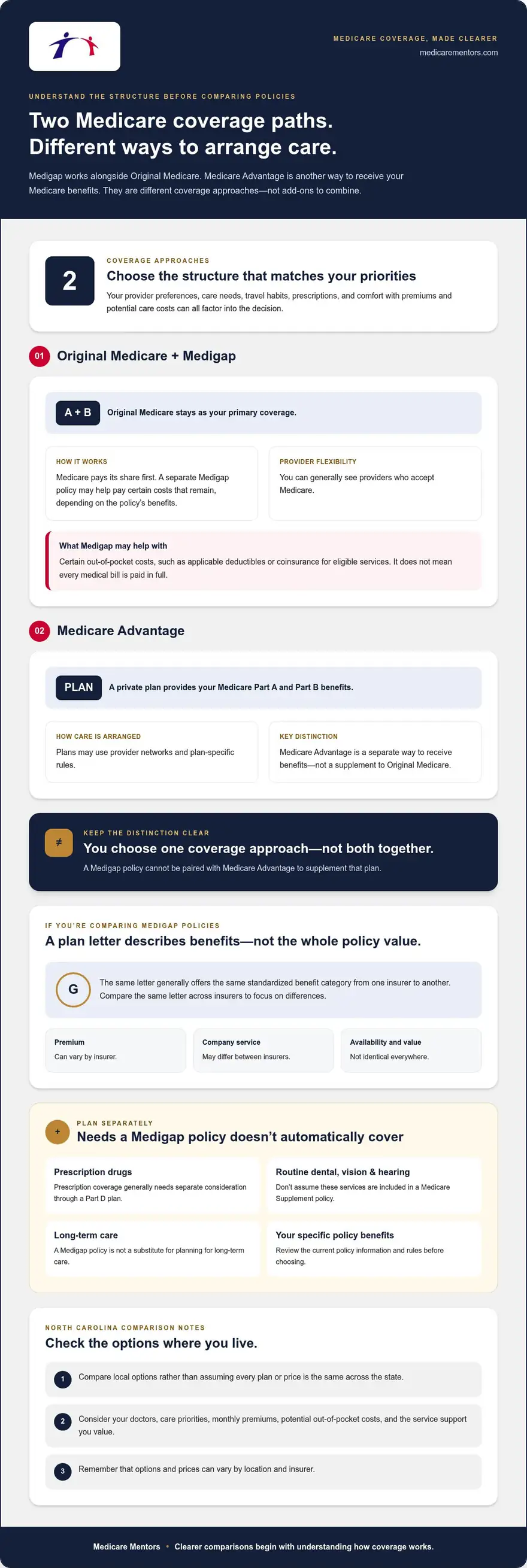
Plan letters give you a starting point for comparing Medicare Supplement coverage. Each letter represents a standardized category of benefits, so the same letter generally offers the same benefits from one insurer to another. Standardization makes benefit comparisons easier, but it doesn’t make premiums, customer service, availability, or overall value identical.
For a clear overview of how these policies work, visit the official Medicare website. Keep in mind that the options available to you and their prices can vary by location and insurer. A plan letter describes benefits, not the price you’ll pay or whether a particular policy is the best fit for your needs.
How do plan letters make comparison easier?
Start by comparing the same letter across insurers. That lets you focus on differences such as premium and company service, rather than trying to compare policies with different benefit structures. A letter alone doesn’t establish a policy’s premium or overall value. To understand the trade-offs between two commonly discussed options, look at a dedicated Plan G and Plan N comparison, including how each option’s benefits fit your budget and care priorities.
Which expenses and services need separate attention?
Medigap is designed to help with certain Medicare cost-sharing expenses, such as applicable deductibles or coinsurance, according to a policy’s standardized benefits and the rules that apply. It isn’t a catch-all policy for every healthcare expense, so review the current policy information before choosing. Prescription drug coverage generally needs separate consideration through a Part D plan.
Make a separate note of any routine dental, vision, or hearing services you expect to use. These needs aren’t automatically addressed by a Medicare Supplement policy. Considering them alongside your medical coverage can give you a more complete picture of your needs, without assuming one policy covers everything.
A practical comparison starts with your priorities: which benefits matter to you, what costs you’re comfortable carrying, and what service support you value. In North Carolina, compare options available for your location rather than assuming every plan or price is the same across the state. Medicare Mentors can help explain Medicare Supplement choices through independent, education-first guidance. Explore Medicare planning guidance as you continue comparing.
Medigap vs. Medicare Advantage: Which Coverage Approach Fits You?
These aren’t interchangeable add-ons. Original Medicare with a supplement keeps Original Medicare as your coverage and uses a separate policy to help with certain costs. Medicare Advantage replaces how you receive your Part A and Part B benefits through a private plan. You choose one coverage approach, not both together.
The practical difference comes down to how care is arranged and paid for. Consider this overview, then compare the details of specific plans before deciding:
| What to compare | Original Medicare plus Medigap | Medicare Advantage |
|---|---|---|
| Provider flexibility | You can generally see providers who accept Medicare. | Plans may use provider networks and plan-specific rules. |
| Coverage arrangement | Original Medicare pays first; a separate supplement may help with certain cost-sharing. | A private plan provides your Medicare Part A and Part B benefits. |
| Prescription drugs | Drug coverage generally requires separate consideration through Part D. | Some plans include drug coverage; details depend on the plan. |
How do provider choice and care access differ?
With Original Medicare, provider choice is generally broad, but a doctor or hospital must accept Medicare for you to receive care through the program. Medicare Advantage plans may limit routine care to a network or include rules such as referrals or prior authorization. Before choosing, list your current doctors and hospitals, consider how often you travel, and think about whether you’re comfortable following plan-specific care arrangements.
Why might someone choose one approach over the other?
A supplement may appeal if access to a broad range of Medicare-accepting providers matters to you, or if you value having help with certain cost-sharing expenses. You’ll also need to weigh its monthly premium alongside possible out-of-pocket costs. Medicare Advantage may suit someone who prefers a different premium structure or values plan features that can include bundled benefits. Those features and rules vary by plan, so compare the details rather than assuming every plan works the same way.
There’s no single best fit for everyone. If you’re evaluating Medicare Advantage, explore this Medicare Advantage plan guidance alongside your doctor, travel, prescription, and budget priorities. That side-by-side review can help you choose a coverage structure based on how you expect to use care, not just on one benefit or cost.
How to Evaluate Medigap Options in North Carolina
A useful comparison starts with your coverage direction, not a policy quote. First decide whether you want Original Medicare with a supplement or Medicare Advantage. Then write down your care priorities, compare policy benefits, and review the costs you may pay over time. This order helps keep a low starting premium or a familiar plan letter from becoming the only factor in your decision.
What should you compare before choosing a policy?
For a Medigap policy, compare the standardized benefits first, then look at insurer-specific premium information. Policies with the same letter generally have standardized benefits, but premiums and service can differ between insurers. Rates may also depend on personal circumstances, so a price you hear about elsewhere may not match your situation in Raleigh or another part of North Carolina.
Use these questions to make your comparison practical:
- Which doctors and hospitals do you want to keep using?
- How often do you travel, and where might you need care?
- What monthly premium fits your budget, and how much out-of-pocket spending could you manage?
- Which services or prescriptions should you account for separately?
Save this checklist before reviewing policies: coverage direction, care priorities, benefits, premiums, potential out-of-pocket costs, and enrollment timing. It gives you a consistent way to compare options instead of relying on memory or a single feature.
When should you review enrollment timing and protections?
Review timing before you apply or make a change. Enrollment windows and guaranteed-issue protections, which can limit an insurer’s ability to use health history when offering coverage, depend on your circumstances and applicable rules. Turning 65, enrolling in Part B, leaving employer coverage, or moving may raise different questions. Don’t assume one enrollment deadline or protection applies to everyone.
For current federal information, check Medicare.gov. For North Carolina consumer guidance, consult the North Carolina Department of Insurance and its Seniors’ Health Insurance Information Program (SHIIP). Confirm how current rules apply to your own situation before making a decision. You can also review this Medicare enrollment planning guidance for broader context.
Once you’ve gathered your priorities and timing questions, an independent, education-first comparison can help you understand the available choices without treating every North Carolina plan or price as identical. Review your Medicare planning options with those questions in hand.
Get Personal Medigap Guidance and Keep Coverage Aligned with Your Needs
Start with the coverage structure that fits how you want to receive Medicare benefits. Then compare policy benefits, insurer details, and how each option matches your doctors, budget, and expected care. A one-on-one conversation can help you sort through those choices without rushing toward an enrollment decision.
What can a one-on-one coverage conversation help clarify?
A conversation with Medicare Mentors can help connect the pieces: how Original Medicare works with a supplement, where prescription drug coverage fits, and which questions to consider before comparing options. Bring a list of your doctors, expected care needs, budget priorities, and any upcoming changes, such as retiring or losing employer coverage. We explain available Medicare Supplement choices in plain language and provide consultations at no cost to you, with no pressure to enroll.
Medicare Mentors is an independent brokerage, not tied to a single insurance carrier. That independence can help you understand available choices across insurers and focus on what matters to you, rather than beginning with one company’s policy. The company reports almost 300 Five-Star Reviews, but reviews aren’t a promise of a particular plan outcome. The goal is to help you make an informed decision based on your circumstances.
Why review coverage when health or life circumstances change?
Your coverage questions may change as your health needs, prescriptions, doctors, or work situation change. An annual review gives you a chance to revisit those priorities and understand the choices available at that time. It’s also a practical moment to raise billing or claims questions. For more context about independent support, read this guide to working with a Medicare broker.
If you’re approaching 65, preparing to retire, or adjusting after a move or change in coverage, bring your questions together before comparing policies. Medicare Mentors’ ongoing support can help you review coverage as your needs evolve, including questions about billing and claims. A plan that suited one stage of life may deserve a fresh look when your priorities shift.
Choose the coverage structure first, then compare benefits and personal fit. If you’d like help sorting through your Medicare Supplement options and ongoing coverage questions, explore Medicare planning guidance at your own pace.
Take Your Next Medicare Step With Confidence
The right coverage choice starts with the way you want to receive Medicare benefits. Decide between Original Medicare with a supplement and Medicare Advantage first, then compare benefits, provider access, and costs against your own priorities. If Medigap is part of your decision, remember that plan letters help compare benefits, while premiums and service can differ by insurer.
You don’t have to sort through every detail alone. Dave and Michele Johnson offer independent, family-run guidance, with consultations and ongoing support provided at no cost to you. Medicare Mentors reports almost 300 Five-Star Reviews, reflecting feedback from people they’ve helped, not a promise of any particular plan or result.
Whether you’re turning 65, retiring, or reviewing coverage after a change in your life, a clear conversation can help you organize your questions and understand your options. Talk with us about your Medicare coverage options at your own pace. You can take the next step with greater clarity and confidence.
Frequently Asked Questions
What is Medigap, and what does it cover?
Medigap is private supplemental insurance that works alongside Original Medicare, not in place of it. Depending on the policy, it can help pay certain out-of-pocket costs such as deductibles or coinsurance for covered services. Benefits are tied to the policy’s plan letter and applicable rules. It doesn’t pay every medical expense, so review the specific policy details and consider costs or services that need separate coverage.
Can I have Medigap and Medicare Advantage at the same time?
No. Medigap is designed to supplement Original Medicare, while Medicare Advantage is a separate way to receive Medicare Part A and Part B benefits. A Medigap policy generally can’t help pay Medicare Advantage plan costs. If you’re deciding between them, compare provider access, plan rules, premiums, and potential out-of-pocket expenses as two different coverage approaches, rather than looking for a way to combine both.
Does Medigap cover prescription drugs, dental care, or vision care?
Medigap generally doesn’t include prescription drug coverage, so consider a separate Medicare Part D plan if you need help with prescription costs. Don’t assume a Medigap policy covers routine dental or vision care, either. Make a separate list of your prescriptions, dental needs, and vision services, then review how each would be covered alongside Original Medicare. This can help you spot gaps before choosing a policy.
When can I enroll in a Medigap policy?
Your main federal Medigap Open Enrollment Period is a one-time six-month window that begins when you’re both 65 or older and enrolled in Medicare Part B. During this period, you generally have protections related to health history. Other enrollment rights may depend on your circumstances. Before applying or changing coverage, confirm your dates and protections with Medicare or the North Carolina Department of Insurance, especially if you’re retiring or losing employer coverage.
Can I be denied Medigap coverage in North Carolina?
Possibly. After your federal Medigap Open Enrollment Period, an insurer may be able to use medical underwriting, which means reviewing health information when deciding whether to offer coverage or at what rate. Certain circumstances can provide guaranteed-issue protections, but eligibility depends on the details. North Carolina doesn’t have an annual birthday rule for switching Medigap policies, so check current guidance with the state Department of Insurance before making a change.
How do I compare Medigap plans in North Carolina?
First compare the same plan letter, since benefits are generally standardized across insurers for that letter. Then review each insurer’s premium information and service, keeping in mind that rates and available options can vary by location and personal circumstances. Consider your doctors, expected care, budget, and comfort with potential out-of-pocket costs. For Raleigh or elsewhere in North Carolina, use current plan and state consumer information rather than assuming every option is identical statewide.
Is Medigap worth it if I already have Medicare?
It depends on your coverage priorities and budget. A Medigap policy may help with certain costs left by Original Medicare and may suit you if broad access to Medicare-accepting providers matters. You’ll also pay a separate policy premium and may need separate prescription coverage. Compare that approach with Medicare Advantage, including its networks and plan rules, then decide which trade-offs best match your care needs and financial comfort.
Does Medigap automatically renew each year?
Many Medigap policies renew automatically as long as you continue paying the required premiums and follow the policy terms. Renewal doesn’t mean the premium will stay the same, so review notices from your insurer and check your budget each year. If a bill or renewal notice is unclear, contact the insurer for policy-specific details. A change in health needs is also a useful reason to review your overall coverage.