
You’re turning 65, leaving employer coverage, or moving to Raleigh, and suddenly your Health Insurance choices come with a dozen questions. Will your doctors still be in network? Will your prescriptions be covered? How do Medicare’s different coverage paths fit together? It’s understandable to feel unsure when a decision can affect both your care and your budget.
Start with your doctors, prescriptions, costs, and timing, not with a plan name. This guide explains the main Medicare paths, including Original Medicare with optional coverage and Medicare Advantage, and clarifies how Medicare Supplement plans differ. You’ll also learn why you can’t have Medicare Advantage and a Medicare Supplement plan at the same time.
Before comparing options, gather your medication list, preferred doctors, and details about any coverage you’re leaving. Plan availability and provider networks can vary by county, so local details matter. We’ll walk through what to check, when to review your choices, and where to find support in North Carolina, including SHIIP’s free, unbiased Medicare counseling and independent plan guidance from Medicare Mentors.
Key Takeaways
- Learn how Original Medicare, Medicare Advantage, Medicare Supplement, and Part D work together, and where their roles differ.
- Compare more than premiums: check provider access, prescription coverage, plan rules, and potential out-of-pocket costs.
- Before seeking guidance, gather details that match your situation, such as an upcoming retirement, employer coverage change, or move.
- Use a practical Health Insurance checklist to compare North Carolina options, then confirm current plan details and provider participation.
- Ask an advisor about carrier relationships, compensation, and ongoing support before choosing whom to work with.
Health Insurance at 65: What Medicare Covers, and What It Does Not
At 65, Health Insurance often means deciding how to use Medicare and whether to add private coverage. Medicare is federal health coverage. Private insurers offer certain Medicare plan options, but Medicare itself isn’t a doctor, hospital, or source of direct medical care. For broader background, see this overview of the health insurance system in the United States.
A useful starting point is this: Medicare coverage paths determine how you receive and supplement coverage, but no single path is right for everyone. Your doctors, prescriptions, budget, and preferences all affect which option may fit. Before comparing plans, decide which providers and medications you want to keep and which costs or plan rules you need to understand.
For a beginner-friendly overview of basic insurance concepts, watch this video:
How the main Medicare coverage paths fit together
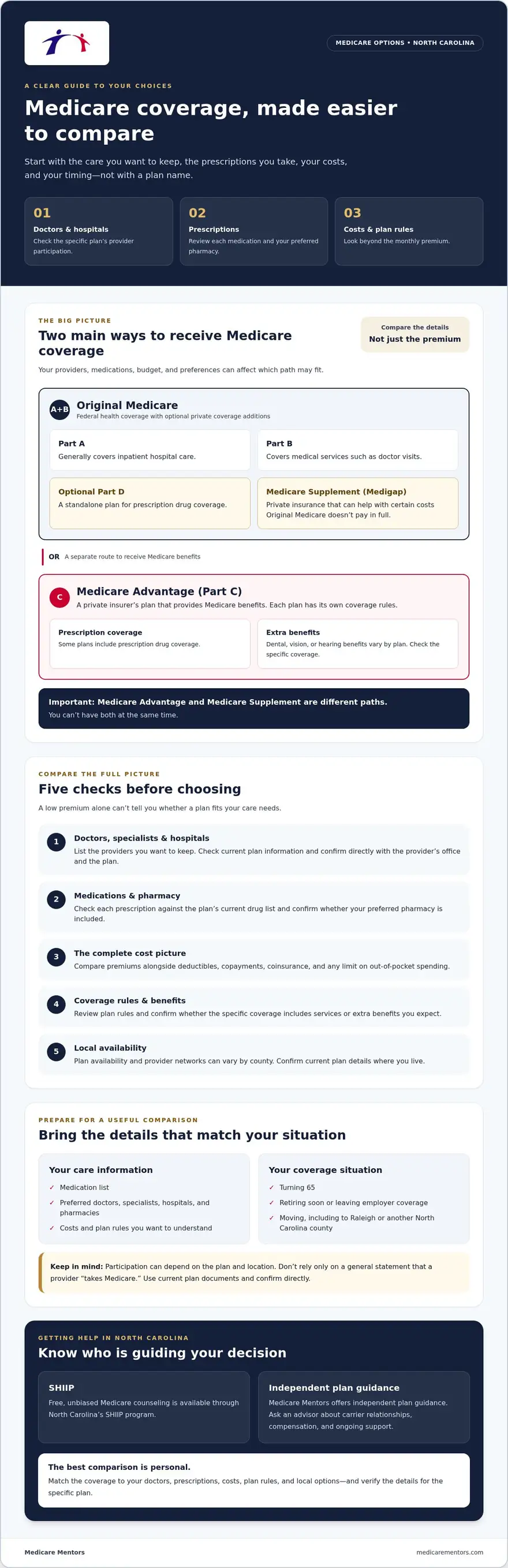
Original Medicare includes Part A, which generally covers inpatient hospital care, and Part B, which covers medical services such as doctor visits. You can add a standalone Part D plan for prescription drug coverage. A Medicare Supplement plan, also called Medigap, is private insurance that can help with certain costs Original Medicare doesn’t pay in full.
Medicare Advantage, or Part C, is another way to receive Medicare benefits through a private insurer’s plan. Each plan has its own coverage rules, and some include prescription drug coverage. Medicare Advantage and Medicare Supplement are different paths, and you can’t have both at once. Explore these Medicare coverage options in relation to your doctors, prescriptions, and budget.
What health insurance may not cover automatically
Don’t assume every service, prescription, or provider is included. Check your doctors and hospitals, review prescription coverage, and confirm whether dental, vision, or hearing benefits are part of the specific coverage you’re considering. Extra benefits vary by plan, and Original Medicare doesn’t include every type of coverage people may want.
Insurance helps pay for covered care; it doesn’t provide the care itself. Coverage rules and costs depend on the specific plan and your circumstances. Review current plan information and confirm directly with your doctors that they participate. A low premium alone can’t tell you whether a plan fits your care needs.
How Medicare Health Insurance Choices Affect Doctors, Prescriptions, and Costs
A plan can look suitable on paper but still cause problems if your doctor isn’t included, a prescription isn’t covered as expected, or cost-sharing doesn’t fit your budget. These details vary across plans and may change, so compare the specific options available where you live. Medicare.gov’s Get started with Medicare resource is a useful place to review the basics.
Check doctors, hospitals, and pharmacies before choosing
Make a list of the doctors, specialists, hospitals, and pharmacies you want to keep using. Check each one against current information for the specific plan, then confirm directly with the provider’s office and the plan. Participation can depend on the plan and location, so don’t rely on a general statement that a provider “takes Medicare.”
Review your prescriptions separately. Check each medication against the plan’s current drug list and confirm whether your preferred pharmacy is included. If a medication or pharmacy changes, that may affect how well the coverage works for you.
Compare the full picture, not one Health Insurance number
A monthly premium doesn’t show the full cost of coverage. Compare it alongside deductibles, copayments, coinsurance, coverage rules, and the plan’s limit on out-of-pocket spending, if it has one. Your costs depend on plan terms and how you use care, so use current documents rather than relying on a broad estimate.
| What to check | Where to verify | Why it matters |
|---|---|---|
| Doctors and hospitals | Current plan directory and provider office | Confirms whether your preferred care providers participate in that specific plan. |
| Medications and pharmacies | Plan drug list and pharmacy information | Shows whether your prescriptions and preferred pharmacy are covered under the plan’s terms. |
| Premiums and cost sharing | Current plan documents | Helps you compare regular payments with costs when you receive care. |
| Coverage rules and yearly exposure | Plan documents and official Medicare information | Clarifies conditions for coverage and how much you may pay for covered services. |
Before enrolling, check current plan documents and provider information, then confirm important doctors and pharmacies directly. Details can differ by plan and location. For a closer look at the choices, review Medicare Mentors’ Medicare planning guidance. Use the plan’s current information to identify any questions you want to ask before choosing.
Which Medicare Health Insurance Questions Matter When Life Changes?
A change in work, location, or health can change what you need from coverage. Before comparing plans, write down what’s changing and gather documents that explain your current coverage. This gives you a clear starting point for asking about options and checking which enrollment timing rules may apply to your circumstances.
When you’re turning 65, retiring, or losing employer coverage
If you’re still working past 65, planning to retire, or losing job-based coverage, ask your benefits administrator for the coverage end date and plan details. Don’t assume that a spouse’s employer plan, retiree coverage, or another benefit works the same way as your current insurance.
Gather these details before seeking guidance:
- The date your current coverage ends and any written information about the change.
- Whether coverage includes a spouse or dependents, and what options may remain available.
- Your current doctors, hospitals, prescriptions, and pharmacy preferences.
- Plan documents that explain benefits, costs, or prescription coverage.
Enrollment timing depends on individual circumstances. Confirm the rules that apply to you through official Medicare information or qualified guidance rather than relying on a general timeline. For more detail, consult a current Medicare enrollment guide and ask questions before making a coverage change.
When you move or your health needs change
Moving to North Carolina? Note your new address and destination county, then check which plans are available there and whether your preferred doctors, hospitals, and pharmacies participate. Options and provider networks can differ by county and plan, so don’t assume coverage will transfer unchanged from another state.
A new diagnosis, prescription, or preferred specialist can also be a reason to review your coverage. List any new medications, providers, or services you expect to need, then compare them with current plan information. If prescriptions are your main concern, pay close attention to drug coverage and pharmacy details.
- Turning 65: Note your birthday month, current insurance, providers, and medications.
- Retiring or losing coverage: Confirm the coverage end date and request written plan details from your benefits administrator.
- Moving: Record your new county and identify doctors and pharmacies you want to keep.
- Changing health needs: List new prescriptions, providers, and care priorities.
North Carolina residents can also consult the North Carolina SHIIP, a state resource for Medicare counseling. Bring your notes and coverage documents so your questions can focus on the changes that matter to you.
How to Compare Health Insurance Options in North Carolina
A checklist keeps plan comparisons focused on what matters to you, rather than a headline benefit or premium. Gather the details below, then check each option against current information for your North Carolina county. This is useful whether you’re comparing local options in Raleigh, Durham, Chapel Hill, Greensboro, Fayetteville, Wilmington, Charlotte, Winston-Salem, High Point, or Greenville.
A practical checklist for comparing Medicare coverage
- Your care needs: Note the services you expect to use and coverage priorities, including dental, vision, or hearing.
- Your providers: List your doctors, specialists, preferred hospitals, and pharmacies. Check each provider with the plan and confirm participation directly with the provider’s office.
- Your prescriptions: Write down each medication, including its name and dosage, and check it against current plan information.
- Your location: Use your county and ZIP code when checking plans. Availability and provider networks can vary by county.
- Your budget: Compare premiums with deductibles, copayments, other cost-sharing, and coverage rules in the plan documents.
- Your questions: Record anything unclear, such as how referrals work, which pharmacies are included, or what happens if you see a provider outside a network.
Keep the answers side by side. If a detail isn’t clear in the plan materials, mark it for follow-up instead of assuming it’s covered.
Where North Carolina residents can verify their options
Start with Medicare.gov and the current documents for each plan you’re considering. Use Medicare’s online resources to review available options, then confirm important doctors and pharmacies directly with the plan and provider. A general directory or old plan document may not reflect current local details.
North Carolina’s Department of Insurance provides information about SHIIP, the state’s Medicare counseling program. Check the department’s current information for available services and contact details before reaching out. SHIIP is another place to ask questions as you compare.
For a guided review of Medicare options, explore Medicare planning guidance. Medicare Mentors is an independent brokerage that provides education and plan guidance at no cost to clients; plans may still have their own costs. If you’d like help reviewing your choices, connect with Medicare Mentors.
Get Clear, Ongoing Help With Your Medicare Health Insurance Decision
You don’t have to sort through every Medicare detail alone. A helpful advisor should make your options easier to understand, explain trade-offs clearly, and give you room to decide without pressure. Ask questions before sharing personal information or choosing coverage.
What independent Medicare guidance should make clear
Ask whether the advisor represents one insurance carrier or works as an independent brokerage. Then ask which plans they can review, how they compare options, and what details they’ll consider, such as your providers, prescriptions, location, and budget.
It’s also reasonable to ask how the advisor is compensated and to have the arrangement explained in plain language. Medicare Mentors provides education, plan guidance, reviews, and ongoing support at no cost to clients. The brokerage receives standard commissions from insurance providers for policy placements and renewals. No-cost guidance doesn’t mean the insurance plan itself is free; premiums and other costs depend on the plan and your circumstances.
A useful discussion should help you understand the advantages and trade-offs of the options reviewed. No advisor can promise that a particular plan will meet every future need or guarantee a specific outcome. You should leave with a clearer understanding of what to verify and which questions remain.
Support beyond the first coverage decision
Your needs can change after you enroll. Medicare Mentors offers annual coverage reviews and assistance when health needs or prescriptions change, as well as ongoing billing and claims support. This can help you understand your next steps, but it doesn’t guarantee that a claim or billing issue will be resolved in a particular way.
Medicare Mentors is an independent brokerage, not an insurer or healthcare provider. Its client materials cite nearly 300 Five-Star Reviews. When evaluating any advisor, focus on whether the person explains the process, answers your questions, and is clear about what they can and can’t do.
If you’re approaching 65, retiring, losing employer coverage, or reviewing a plan after a change in your care, it’s fine to start with questions. Explore Medicare planning guidance to learn about support with Medicare options, then decide whether a conversation would be useful for you.
Choose Medicare Coverage With Greater Confidence
The right Health Insurance choice depends on your care priorities, prescriptions, budget, and location. Before deciding, compare the coverage paths carefully, confirm your doctors and medications against current plan information, and revisit your needs when work, location, or health changes.
You don’t have to sort through those details alone. Medicare Mentors is an independent, education-first brokerage that isn’t tied to a single carrier. Its guidance and client services are provided at no cost, though the plans themselves may have premiums and other costs. Support can continue beyond enrollment with reviews and help understanding billing and claims questions. Medicare Mentors’ client materials cite nearly 300 Five-Star Reviews.
If you’re turning 65, retiring, losing employer coverage, or simply want to understand your options, ask questions at your own pace. Talk with Medicare Mentors about your Medicare options and take your next step with a clearer picture of what may fit.
Frequently Asked Questions
What health insurance options do I have when I turn 65?
You can generally compare two main Medicare paths: Original Medicare or Medicare Advantage. Original Medicare includes Parts A and B; you can consider a separate Part D plan for prescriptions and a Medicare Supplement plan to help with certain costs. Medicare Advantage is offered by private insurers as another way to receive Medicare benefits, and some plans include drug coverage. Compare options using your providers, prescriptions, location, and budget rather than assuming one path fits everyone.
Is Medicare the same as health insurance?
Medicare is health insurance, specifically a federal program that helps cover eligible medical care for people who qualify. It isn’t direct medical care, and it doesn’t automatically cover every service or expense. Coverage depends on the Medicare path and plan you choose. Before making a decision, check which services, providers, and prescriptions are included, along with applicable costs and coverage rules. This gives you a clearer picture of how Medicare may fit your needs.
Can I keep my employer health insurance after I become eligible for Medicare?
You may be able to keep employer coverage, but the answer depends on your employer’s plan and circumstances. Ask the benefits administrator whether coverage continues if you enroll in Medicare, how the two coverages work together, and what happens when you retire or leave the job. Get the coverage end date and plan details in writing. Annual Enrollment is separate: from October 15 to December 7 each year, people with Medicare can join, switch, or drop Medicare Advantage or Part D plans. Confirm your situation with Medicare.gov.
What happens to my health insurance if I move to North Carolina?
Your current coverage may not transfer unchanged, especially if you have a plan with a provider network or service area. Check plans available in your new county and confirm your doctors, hospitals, and pharmacies directly with the plan and providers. This matters whether you’re moving to Raleigh, Durham, Chapel Hill, Greensboro, Fayetteville, Wilmington, Charlotte, Winston-Salem, High Point, or Greenville. Review current plan information before relying on your existing network.
How do I compare Medicare plans for my doctors and prescriptions?
Make a list of your doctors, hospitals, medications, and preferred pharmacies. Check providers using current information for the specific plan, then confirm participation directly with their offices. Review each medication in the plan’s current drug information and verify pharmacy access. Compare premiums, deductibles, copayments, coverage rules, and potential out-of-pocket exposure, too. A low premium alone doesn’t show whether Health Insurance coverage fits your care needs or prescription costs.
Do I need both Medicare Advantage and a Medicare Supplement plan?
No. Medicare Advantage and Medicare Supplement, also called Medigap, are separate coverage paths, and you can’t have both at the same time. Medicare Advantage provides Medicare benefits through a private plan. Medigap works alongside Original Medicare and can help pay certain costs that Original Medicare doesn’t fully cover. Compare how each path handles providers, prescriptions, costs, and plan rules before deciding which arrangement better suits your circumstances.
Does Medicare Mentors charge for help comparing Medicare coverage?
Medicare Mentors provides its education, plan guidance, reviews, and ongoing support at no cost to clients. The brokerage isn’t an insurer or healthcare provider. No-cost guidance doesn’t mean the insurance plan itself is free; plans may have premiums and other costs based on their terms and your circumstances. Ask how an advisor compares available options and how the brokerage is compensated so you understand the process before making a choice.